What makes a Rohde kiln so special?

Eddie Bernard, Wet Dog Glass founder, explains — in his own words — why a ROHDE fires differently from anything else he's used.
You can read the specs. You can study the dimensions. But sometimes, the best way to understand a kiln is to hear it from someone who fires one every day. We sat down with Eddie to talk about what sets a ROHDE apart, and his answer came down to one thing: the details most manufacturers cut corners on are exactly the details ROHDE gets right.
It starts with the insulation
"I love the microporous 1 and 3/8 inch insulation on both the top and bottom. It creates an even heat uniformity throughout the body of the kiln." — Eddie
Microporous insulation is significantly more efficient than standard ceramic fiber. It holds heat tighter, loses less energy to the surrounding air, and keeps your firing environment stable. The result? Less heat loss and more energy efficiency. For a studio ceramicist, that means lower bills, more consistent results, and a kiln that performs the same way on firing 1 as it does on firing 1,000.

The coil that outlasts the rest
"The heating element coils are thicker than a standard US kiln. These coils far outlast smaller gauge elements." — Eddie
This is one of those specs that sounds small but changes everything in real studio use. Thicker coils run cooler relative to their output, which means they degrade more slowly. They hold their shape better over time. For a working studio, element replacement is one of the biggest ongoing costs of kiln ownership. A coil that lasts longer is a genuine long-term saving that adds up firing after firing, year after year.
In practical terms, this is the difference between a kiln you trust and one you don't. Uneven heat means uneven results. Glazes behave unpredictably. Work that took hours to throw and trim comes out of the kiln looking inconsistent. ROHDE's engineering — the insulation, the coil design, the chamber geometry — all work together to distribute heat evenly across every firing.
A quality product. Full stop.
The components ROHDE chooses are for durability, not cost-cutting. The kiln performs consistently over time, not just out of the box. At ROHDE, that commitment to quality goes back more than 40 years, from Helmut Rohde's original vision in Westphalia to the family who runs the company today.
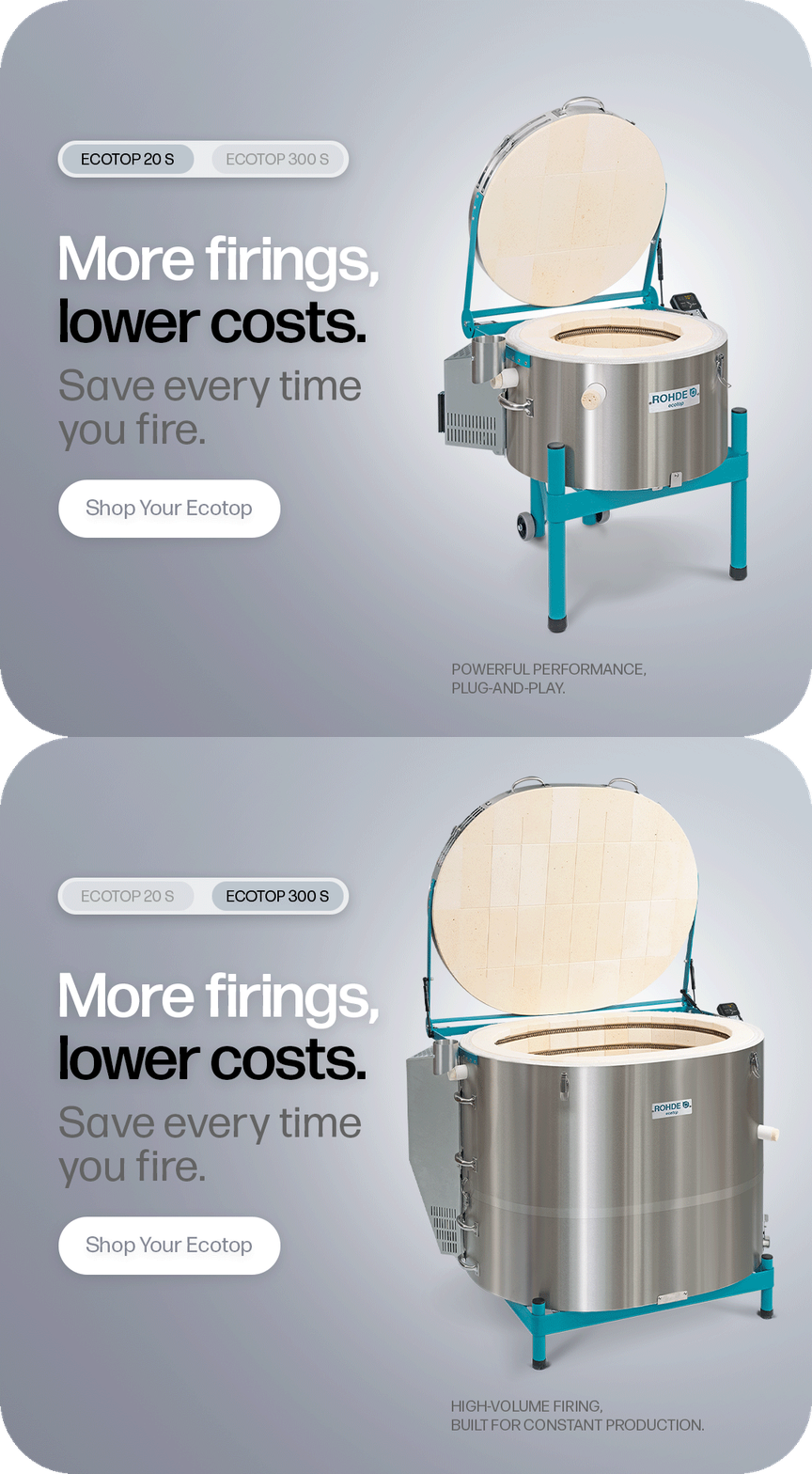
The ROHDE Ecotop series reaches true cone 10 temperatures, uses up to 40% less electricity than comparable kilns, and comes in a range of sizes to fit any studio setup. It's the kind of kiln that disappears into your process. You stop thinking about it and start thinking about your work. That's the whole point.
Explore the full Ecotop range and find the right size for your studio.