FAQ: What happens to the exhaust air? Do I need a fan?
Figure 1

Figure 2

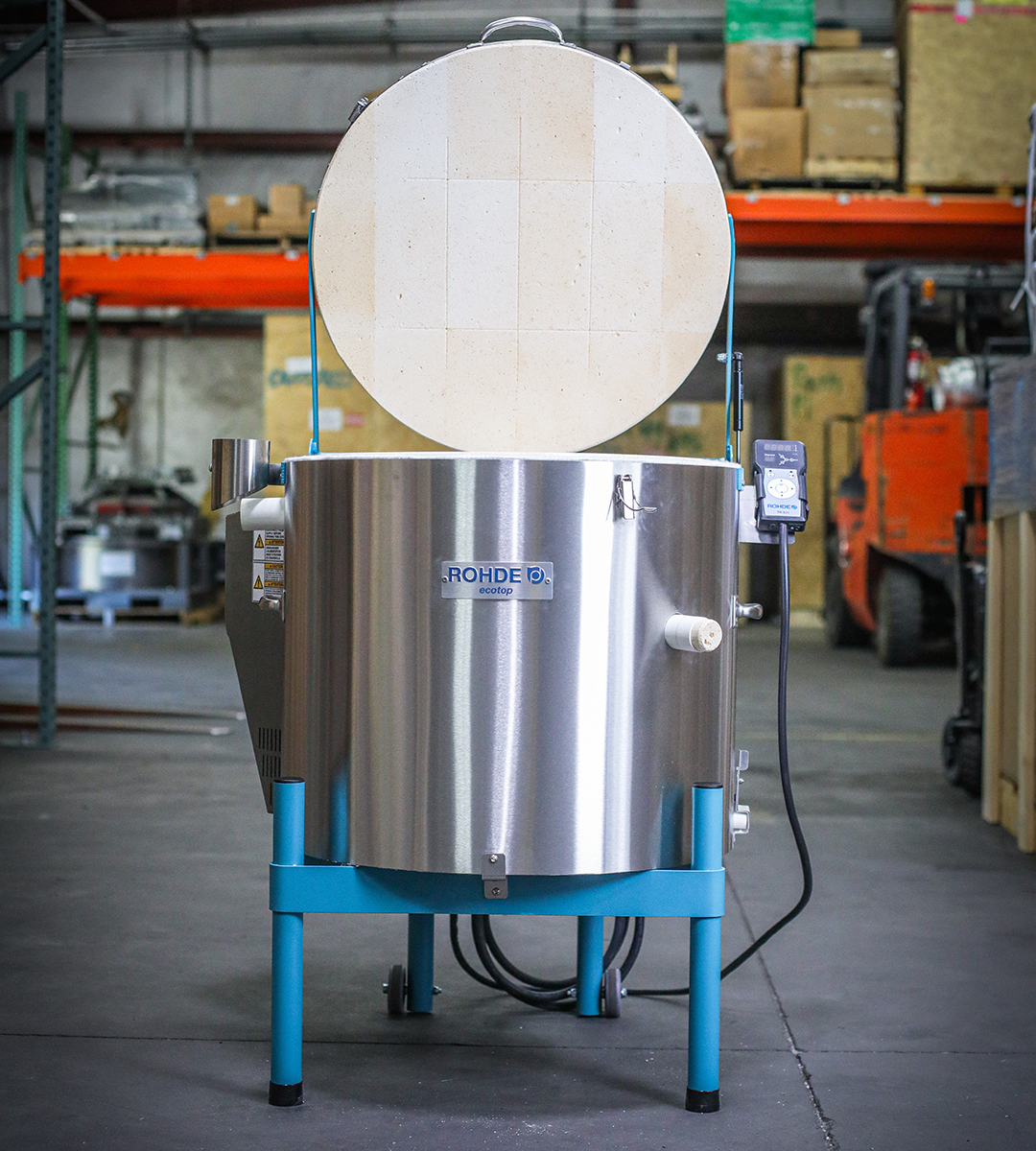
Hot exhaust air (Fig. 2) escapes through the ceramic exhaust air pipe (Fig. 1) inserted in the kiln casing. This rises upwards into the exhaust air socket, taking a large proportion of cool ambient air (Fig. 2) with it. The exhaust air is mixed with the ambient air and then drawn into the pipe (Figure 2). Mixing cools the hot exhaust air.
Hot exhaust air (Fig. 2) escapes through the ceramic exhaust air pipe (Fig. 1) inserted in the kiln casing. This rises upwards into the exhaust air socket, taking a large proportion of cool ambient air (Fig. 2) with it. The exhaust air is mixed with and cooled by the ambient air and then drawn into the pipe (Figure 2).
Natural extraction is possible up to approx. 4–5 metres, depending on the design of the exhaust air duct. If the exhaust air duct is longer than this, it may be necessary to use an additional exhaust air fan.
Natural extraction is possible up to approx. 13-16 ft (4–5 metres), depending on the design of the exhaust air duct. If the exhaust air duct is longer than this, it may be necessary to use an additional exhaust air fan.
How the exhaust air is handled using the example of a toploader:
Aluminium exhaust air hose Ø 70 mm (optional accessory)
Aluminum exhaust air hose Ø 2.75” (70 mm) (optional accessory)
- Exhaust air socket
- included in the accessories
- Ceramic exhaust pipe
- included in the accessories
- Exhaust air
- Ambient air
- Exhaust air socket--included in the accessories
- Ceramic exhaust pipe--included in the accessories
- Exhaust air
- Ambient air