What Does It Actually Cost to Fire a Kiln?
Electricity is one of the ongoing costs of running a studio, and it's also one of the hardest to see clearly. Clay comes in bags with a price on the side. Glaze materials are weighed and measured. But a firing draws its power quietly over many hours, and it arrives on a bill combined with everything else in the building, which makes it difficult to know what any individual load actually cost you.
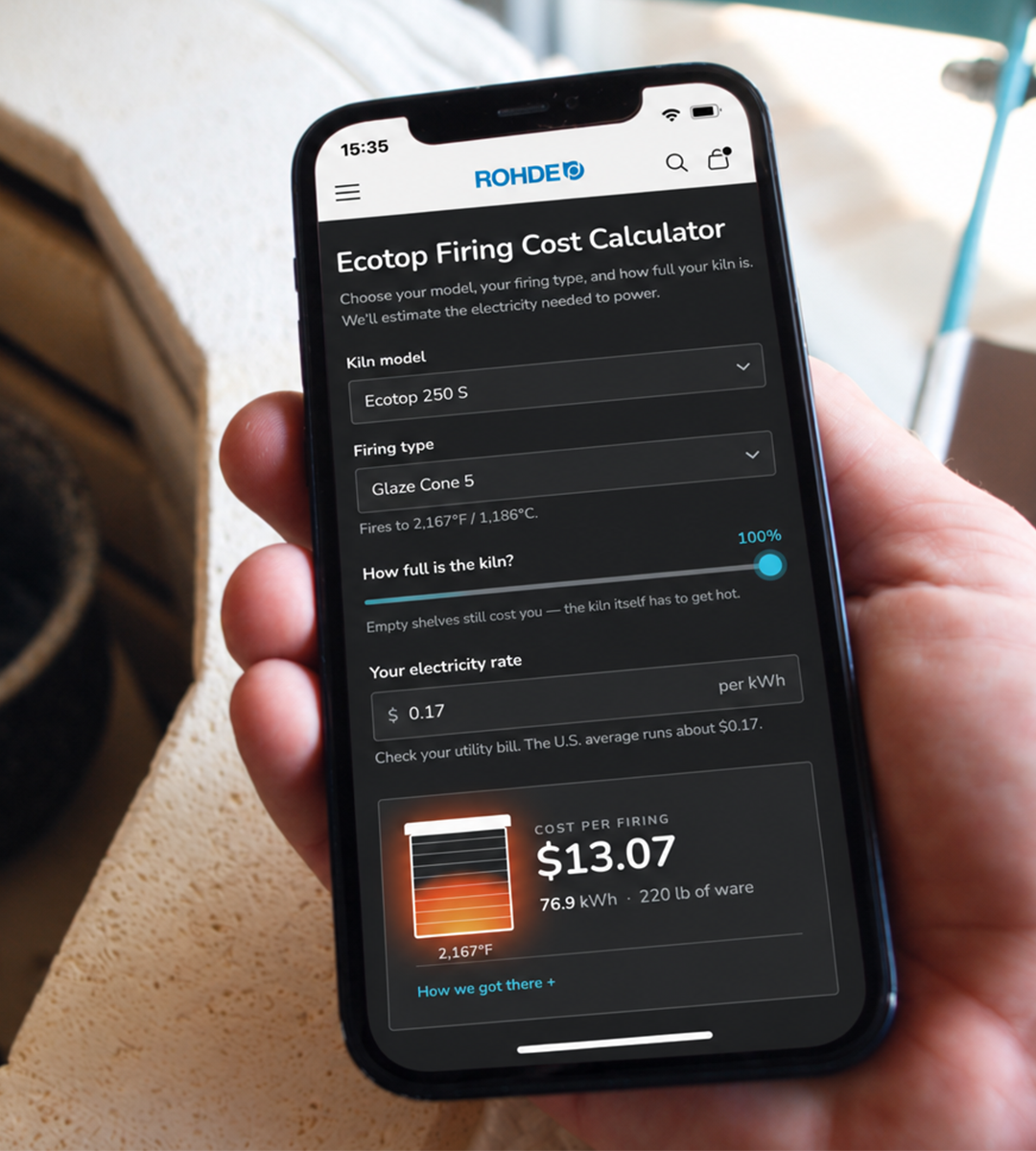
The Ecotop Firing Cost Calculator gives you that figure directly. It's built on the same method Rohde has used in Europe for years, and it works from three pieces of information.
The first is your kiln model. Each Ecotop has a different mass of insulation, and heating that mass accounts for a large share of the energy any firing uses. The second is your firing type, from a Cone 017 decor firing for gold and luster up to a Cone 10 glaze. The third is how full the kiln is, which has a greater effect on cost per piece than most people expect. Add your electricity rate — it's printed on your monthly statement as a price per kilowatt-hour — and the calculator returns the cost of that single firing.
Why loading matters so much
This is the part that tends to be most useful in practice.
A kiln has to heat itself before it can heat anything else. The insulation, the elements, the shelves and the posts all climb to temperature regardless of how much work is inside, and on smaller kilns that fixed cost makes up the majority of the energy used. The ware itself is a comparatively small addition.
The practical result is that the cost of a firing changes only modestly with load, while the cost per finished piece changes considerably:
| Kiln fill | Ware | Cost | Cost per pound |
|---|---|---|---|
| 25% | 13 lb | $3.72 | $0.28 |
| 50% | 26 lb | $4.06 | $0.15 |
| 75% | 40 lb | $4.40 | $0.11 |
| 100% | 53 lb | $4.74 | $0.09 |
Ecotop 60 S, Cone 6 glaze, $0.17/kWh
Loading fully rather than a quarter full reduces the energy cost of each piece by roughly two thirds. It's a larger swing than anything the cone choice produces: moving from the lowest firing to the highest changes cost per pound by a little under double, while moving from a quarter-full kiln to a full one changes it by around three times. Temperature is set by the work. How you pack the kiln is entirely up to you.
Adjusting the load slider in the calculator shows the same effect across any model and any firing.